


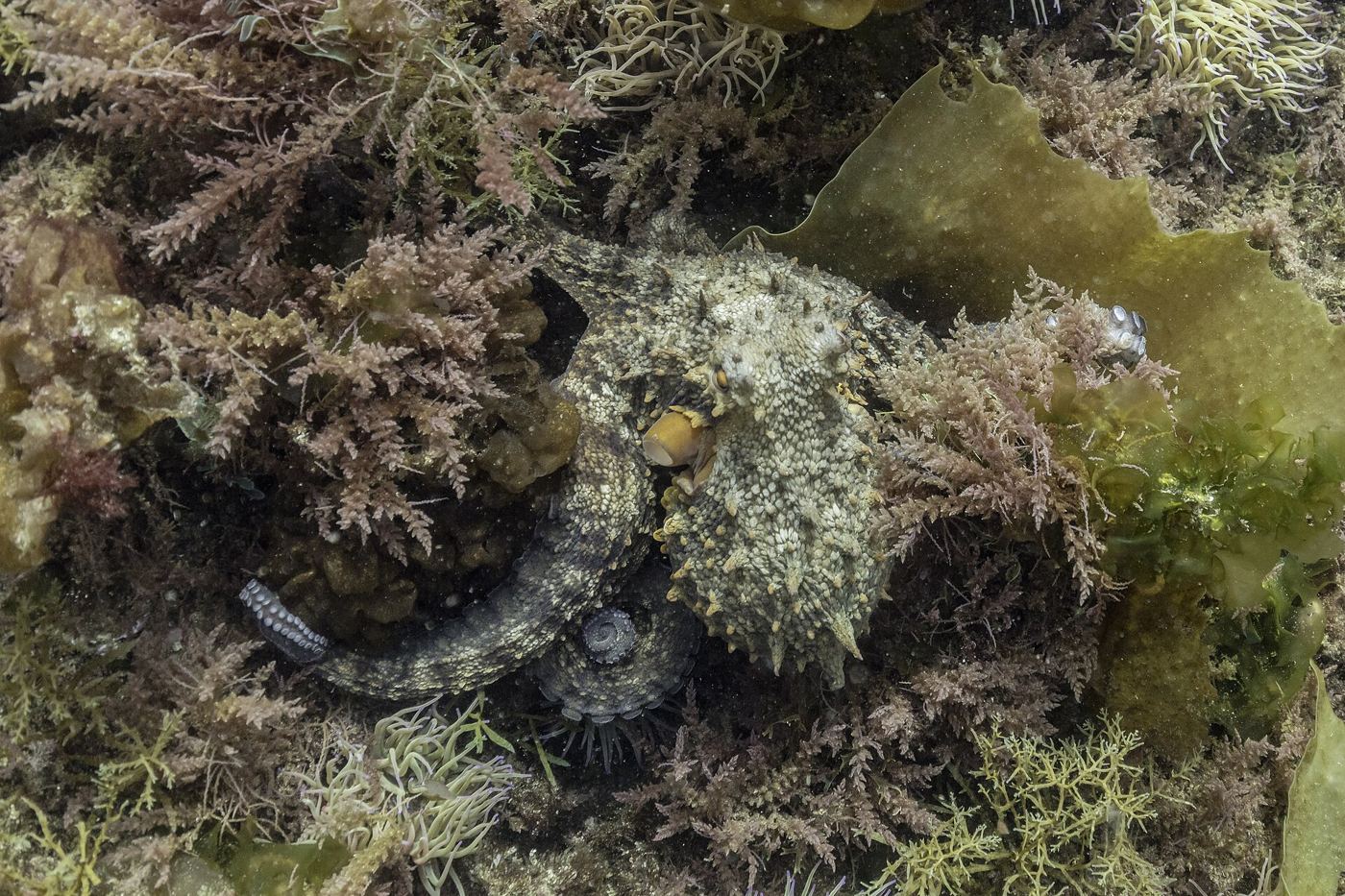
An octopus is one of the most surprising animals in the sea. With three hearts, blue blood and arms that can taste what they touch, it seems built from a different blueprint from almost every other creature. Its most famous talent is changing colour: tiny sacs of pigment in the skin expand and contract in less than a second, letting the animal match rock, sand or coral, or flash bold patterns to warn a rival. The same skin can raise bumps to match the texture of the seabed, so a resting octopus can vanish in plain sight. Octopuses also learn quickly. In laboratories they have unscrewed jar lids, solved mazes and remembered the answers days later, and in the wild they use shells and stones as tools and shelters. With no shell to protect them, they rely on brains and camouflage to survive among sharks and eels.
What the Evidence Shows
Researchers are still working out how much an octopus really understands. Each arm carries its own cluster of neurons and can act almost independently, tasting and exploring on its own while the central brain watches over the whole body. This distributed nervous system is unlike anything in a mammal, and it raises questions about how intelligence can evolve along a completely different path. Octopuses live fast and die young, most surviving only a year or two, yet they pack remarkable learning into that short life. Their camouflage has also inspired engineers, who are studying the skin’s colour-changing cells to build soft robots and materials that can blend into their surroundings. For marine biologists, every encounter with an octopus is a reminder that the sea still holds minds that work in ways we are only beginning to grasp. Reporting and analysis from sources such as NASA track the same developments, and specialists following the octopuses changing colour and solving puzzles say the direction is now consistent across independent lines of evidence.
The Wider Context
Funding bodies are watching the octopuses changing colour and solving puzzles closely because the work sits at the junction of basic curiosity and practical return. Grant panels increasingly ask for a path from discovery to application, while researchers push back that the most valuable uses of fundamental science are rarely the ones written into the original proposal. The tension is productive when both sides stay honest about timescales.
What Happens Next
The long view on the octopuses changing colour and solving puzzles is that fields advance by accumulation rather than by single announcements. This result adds a solid, checkable piece to a structure many teams are building, and its authors have shared their data so the piece can be tested from every side. That is how the picture eventually becomes reliable enough to act on. You can follow related developments in our coverage of science.
It is also worth remembering how quickly the picture in this area has changed before. Positions that looked settled a few years ago have been revised as new data arrived, and the same humility is appropriate now. The strongest coverage of this subject, and the most useful advice, tends to come from sources that update their views openly when the facts move, rather than defending an earlier position long after it has stopped fitting the evidence available.
