


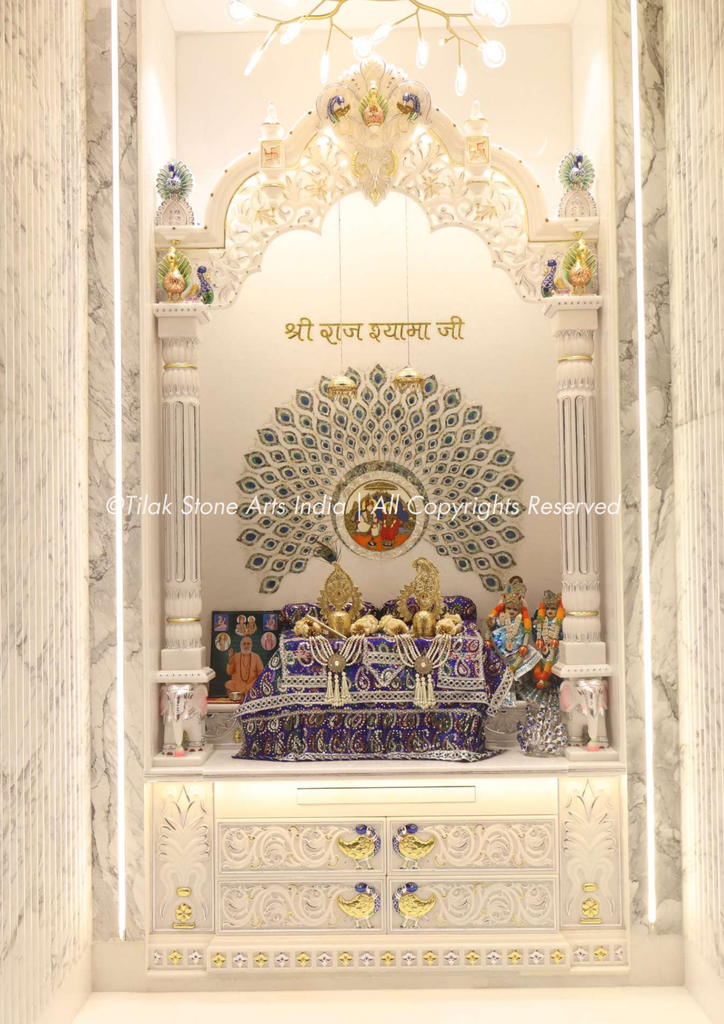
A marble temple can look perfect in a catalogue and still feel wrong when placed at home. The arch sits too close to the ceiling, or the carving clashes with a plain modern wall. Many buyers spot this only after delivery. Choosing a marble temple manufacturer that plans around the actual room, rather than selling a finished piece, avoids that disappointment.
A capable marble temple manufacturer keeps design and stonework in the same hands, so the measurements and the carving get decided together. The family shares a niche or a room along with how they pray. What comes back is a temple drawn for that exact spot, carved in white Vietnam marble and fitted by the people who made it.
A Finished Design Is Only Half the Decision
Room Measurements Set the Limits First: A home marble temple should be sized to its wall or niche before anyone picks a carving style. Height matters most. A tall shikhara looks grand in a showroom and cramped under a low apartment ceiling. Depth counts too, because people need to stand in front of it and light a diya without backing into the sofa.
Late Decisions That Narrow Every Option: Leaving temple planning until the interiors are finished limits what can be built. By then the ceiling height is fixed and the north-east corner, the usual Vastu choice, may hold a wardrobe. In everyday design work, mandir designers regularly meet families at exactly this stage, settling for a smaller temple than they had pictured.
From a Phone Photo to a Fitted Temple
Starting with Measurements and Photographs: A custom temple project begins with photographs and measurements of the space. Designers then ask which idols the family already owns and whether prayers happen standing or seated on the floor. That last detail changes the platform height more than people expect. Vision matters too, even if it is only a saved photo.
Approving a Bespoke Design in 3D: A bespoke design with a 3D visual lets the family see the temple inside their own room before carving begins. Changes are easy now. Raise the arch a few inches, or swap a floral jaali for a plainer panel. Once artisans start cutting, the same edits cost far more, and a few become impossible.
Handcrafting, Assembly and Final Fitting: Artisans carve large marble temples in sections so they pass through standard doors and lifts, and fitters assemble them on site. Each piece gets hand-finished in the workshop, and a trial assembly there catches gaps early. A marble temple manufacturer that sends its own fitters for installation keeps the joints tight and the levels true.
Customisation around Real Rooms and Families
Height Limits and Awkward Corners: Custom marble temples can be built to fit low ceilings and narrow alcoves that no standard model suits. Designers can lower the dome or turn a floor temple into a wall-mounted one. Homes built for multigenerational living need another adjustment, since grandparents who pray on a chair want the idols higher than children sitting cross-legged would.
Matching Existing Interiors and Deity Layouts: A custom temple can match existing interiors by echoing the flooring tone or the mouldings already in the room. Deity arrangements differ from home to home too. Some families keep a single Ganesha, others a full Ram darbar, and Hindu iconography guides where each figure sits and how much room it needs.
Weighing a Readymade Temple against a Made-to-Measure One
Where Readymade Temples Make Sense: A readymade marble temple suits buyers who need something quickly and have a standard space to fill. The piece is visible before purchase, which feels reassuring. The trade-off shows up at home. Fixed sizes rarely match a specific niche, and the deity steps come preset, so a family with several idols may end up crowding them.
One Team Instead of Several Middlemen: Buying a temple through a stone market can look cheaper, but coordination falls on the buyer. Someone has to chase carvers and transporters separately, usually through a middleman. A marble temple manufacturer with in-house designers and artisans answers for the whole result. It asks for more decisions up front, which some families find slow, and brings fewer surprises later.
Value That Lasts Long after Installation
White Marble That Ages Well: White Vietnam marble works well for home temples because its fine, even grain holds detailed carving and keeps a clean white tone. Care stays simple. A damp cloth and a pH-neutral cleaner deal with diya soot, while acidic products etch the surface. Looked after this way, the temple can pass to the next generation.
What to Confirm before Ordering: Individual choices, from ceiling height to idol order, only come together as one finished temple when a single team handles both the design and the carving. A reliable marble temple manufacturer walks the family through each decision before any order goes ahead. A few quick checks at this stage save a lot of regret later.
- Leave clear space between the temple and the ceiling for a bell.
- Share idol sizes before the steps are drawn.
- View the 3D visual inside the actual room.
- Ask whether installation is included.
- Get the stone named in writing as white Vietnam marble.
A Temple Made for One Home Only
A temple planned around the room and the family’s way of praying feels settled from the first aarti. Each month of delay lets another fixture take the space the temple needed. Book a design consultation while the plans can still change, and share the space measurements along with details of the idols you already own.
