


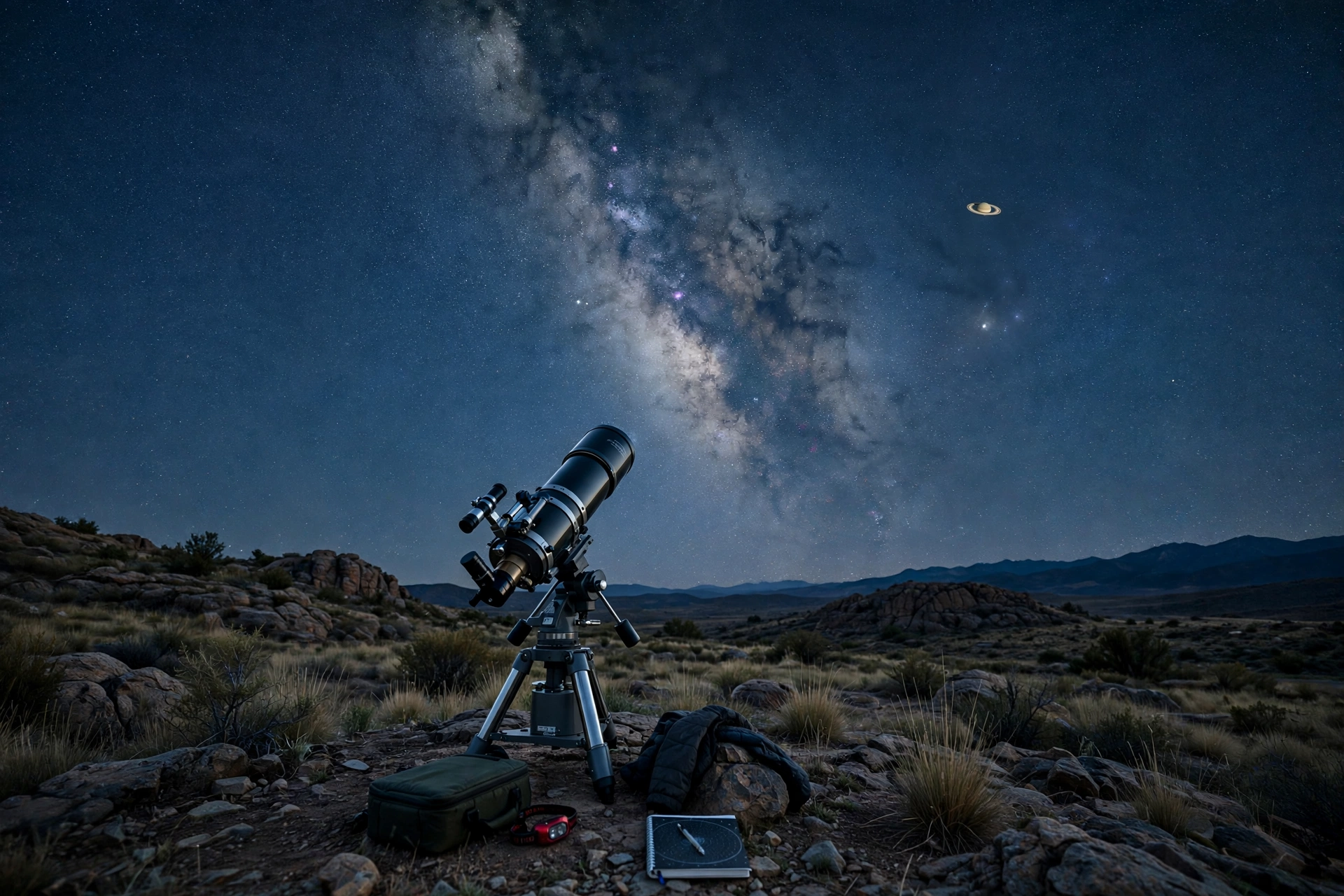
Saturn’s family has grown dramatically after astronomers confirmed 128 new moons, taking its recognised total to 274. That figure makes Saturn, by a wide margin, the planet with the most moons in the solar system. With recognition from the International Astronomical Union now secured, the moons will enter the official catalogues. The confirmation marks the end of a long process of observation, checking and re-checking. It is the kind of development that rewards a closer look, as readers who follow discoveries beyond the royal headlines will appreciate.
Hidden in Plain Sight
Most of the newcomers belong to Saturn’s swarms of irregular moons, which follow tilted, elongated and sometimes backwards orbits. One leading idea is that a handful of captured objects shattered over time, scattering the pieces we now count as separate moons. Some probably began life as passing asteroids, seized by Saturn’s gravity billions of years ago and never released. Studying their groupings is a bit like reading a family tree written in orbits. Readers can explore the background in Nature’s science coverage, which covers the institutions behind work of this kind.
The Telescope Work Behind the Count
By comparison, Jupiter’s recognised count is 95, Uranus stands at 28 and Neptune’s tally is just 16. Remarkably, Saturn now has more known moons than the other three giant planets combined. Every improvement in camera sensitivity seems to hand Saturn another handful of moons. Our own planet, by contrast, continues with a single, familiar moon. If you missed it, our earlier coverage is also worth your time: our previous day’s coverage.
Fragments of Ancient Collisions
Naming comes next, and past practice suggests mythological figures will supply most of the labels. Astronomers expect follow-up work to sharpen the orbital data, and few would bet against further discoveries. The findings also sharpen questions about how Saturn’s famous rings formed and how its whole system evolved. For the moment, the record belongs firmly to the ringed planet.
A Census That Dwarfs Its Rivals
Using the Canada-France-Hawaii Telescope, the team stacked and compared images until the tiny moving points of light gave themselves away. Scientists linked to the University of British Columbia helped verify the orbits and rule out asteroids passing in the background. Most of the new moons are tiny, only a few kilometres across, and shine far too faintly for amateur instruments. Only after the same object was seen again and again, following Saturn through the sky, could it be added to the list.
Saturn will not look any different through a backyard telescope tonight, but what we know travels with it has changed for good.
The International Astronomical Union keeps the official lists, and its working groups check every claimed orbit before a discovery is announced, which is why announcements of this kind often arrive years after the first images were actually taken. Saturn’s largest moon, Titan, is bigger than the planet Mercury and has lakes of liquid methane, a reminder that the system’s variety runs from genuine worlds down to rubble piles only a few streets wide. It is a point worth noting for readers who follow discoveries beyond the royal headlines.
Planetary scientists say small moons are time capsules, preserving material from the era when the giant planets were still forming, and their surfaces record billions of years of impacts that larger, geologically active worlds have long since erased. Some of the newly confirmed moons may eventually be visited only by light: no mission is planned to them, and their stories will be told entirely by telescopes watching from millions of kilometres away. Developments like this are exactly what readers who follow discoveries beyond the royal headlines tend to watch most closely.
Amateur astronomers cannot see these moons, but they can enjoy Saturn itself, which returns to evening skies every year or so and remains, even in a modest telescope, one of the most rewarding sights in the whole night sky. Ring scientists are particularly interested in the smallest newcomers, because dust-sized and kilometre-sized bodies alike help calibrate how material moves, collides and clumps within Saturn’s wider gravitational reach. Expect further coverage here as the story develops for readers who follow discoveries beyond the royal headlines.
There is also a practical side to the census: spacecraft planners and theorists alike need complete maps of a planet’s companions, because each moon tugs, however slightly, on the orbits and rings of its neighbours. Telescopes on mountain tops in Hawaii, where the Canada-France-Hawaii Telescope stands, benefit from exceptionally clear and steady air above the Pacific, far from city lights and above much of the weather that troubles observatories at lower altitudes. The finer details will keep mattering to readers who follow discoveries beyond the royal headlines in the months ahead.
