


It has the quality of a story passed down through deep time: families walking the shore of a great lake, children alongside adults, while the shoreline itself kept changing beneath their feet. New research from White Sands in New Mexico gives that story a scientific frame, showing that early humans there lived through abrupt environmental change at the very peak of the last ice age.
The study, in Science Advances (DOI 10.1126/sciadv.aeh0707), reconstructs the world of ancient Lake Otero in the Tularosa Basin during the Last Glacial Maximum. Its sediment record indicates repeated shifts in lake level and vegetation, driven by a climate that fluctuated rather than settling into any long stability.
Footprints in a Changing World
White Sands’ fossil footprints, dated in earlier studies to roughly 21,000 to 23,000 years ago, are among the oldest direct traces of people in the Americas. Set against the new climate record, they become something more than a dating milestone. They are evidence of everyday life, journeys for water, food and company, conducted in a landscape whose resources rearranged themselves over time.
Coping with that would have required exactly the qualities the archaeological record keeps hinting at: intimate local knowledge, flexibility, and social memory strong enough to carry hard-won lessons between generations.
Why the Story Resonates
The research is available in full at Science Advances, and it lands at a moment when adaptation to environmental change dominates public discussion. The White Sands evidence cannot offer modern policy answers, but it does offer perspective: human beings have been adapting to abrupt change, successfully, since long before farming, cities or writing.
Our editors enjoy stories where careful research changes a familiar picture, much as in our report on how Phones Out of Classrooms: Grades Rise in 16,000-Student Study.
An Enduring Landscape
What the Lake Left Behind
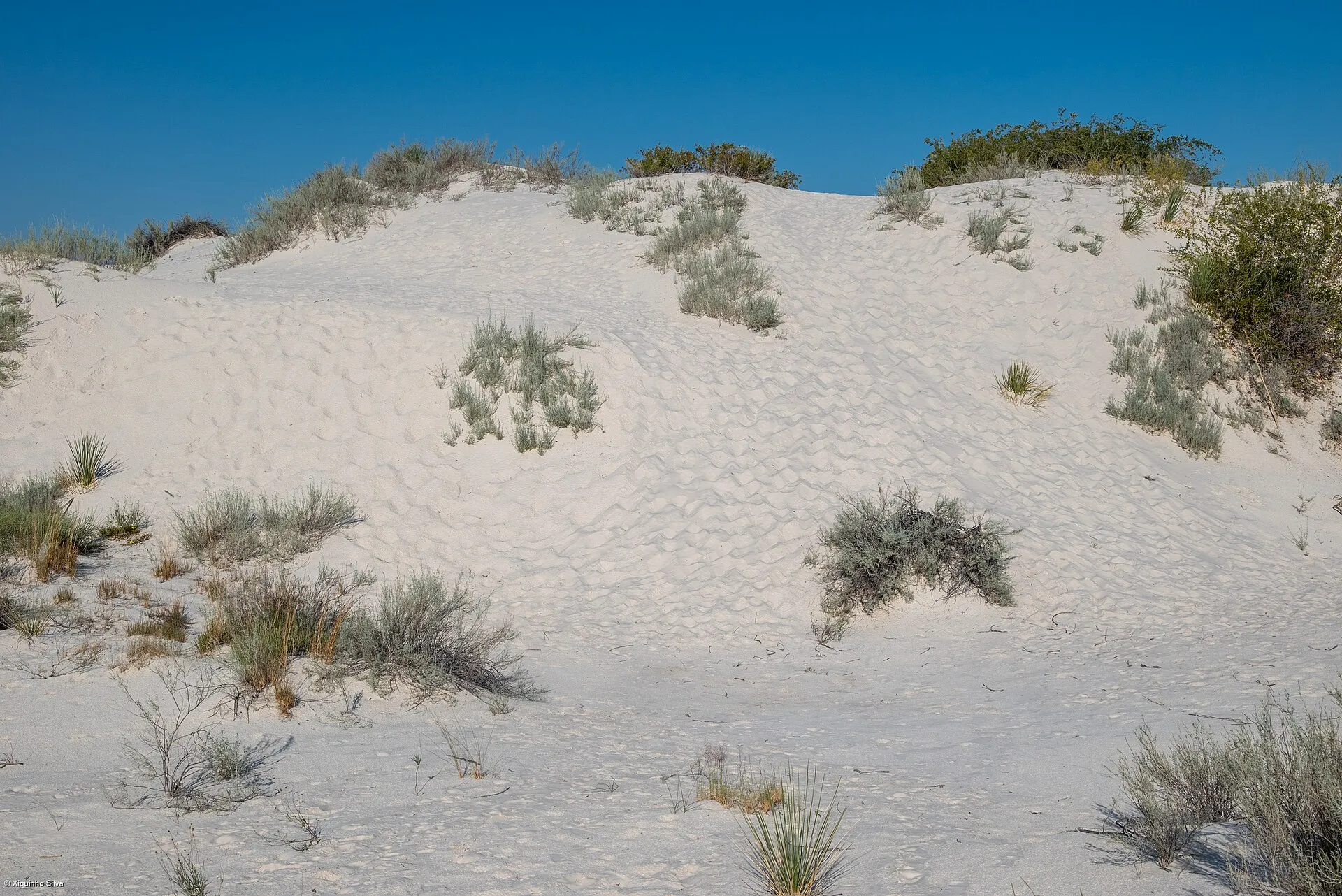
When Lake Otero finally dried, it left the basin’s gypsum to the wind, which piled it into the dunes that make White Sands famous today. In a sense the park’s beauty is the residue of the story the new study tells: the same mineral flats that preserve the footprints exist because an Ice Age lake rose, fell and eventually disappeared in a changing climate.
Preservation cuts both ways. Wind still moves the dunes, and researchers work against erosion to document trackways before they fade. Each field season is therefore partly a rescue operation, racing to record evidence of Ice Age lives that survived in the ground for twenty thousand years but may not survive much longer unrecorded.
For the National Park Service, which manages White Sands, the research has added a powerful new layer to how the park is interpreted for visitors. Rangers can now connect the dazzling modern dunes to a specific vanished world of lakes, megafauna and Ice Age families, and visitors consistently rank the footprint story among the most memorable parts of a visit. Science, in this case, has made a beautiful place considerably more interesting.
It is worth pausing on the sheer improbability of the evidence itself. Footprints are among the most fragile traces a person can leave, gone within hours in most landscapes. That thousands survived here, alongside the climate record of the world they were made in, is a geological accident of the first order, and the research community is treating it with appropriate seriousness and speed.
Today the lake is gone and the gypsum dunes draw visitors for their beauty. Beneath and within them lies one of the great archives of human prehistory. The latest study adds weather to that archive’s story, and with it a cast of Ice Age families who met a restless climate and, generation after generation, found a way to stay.
